
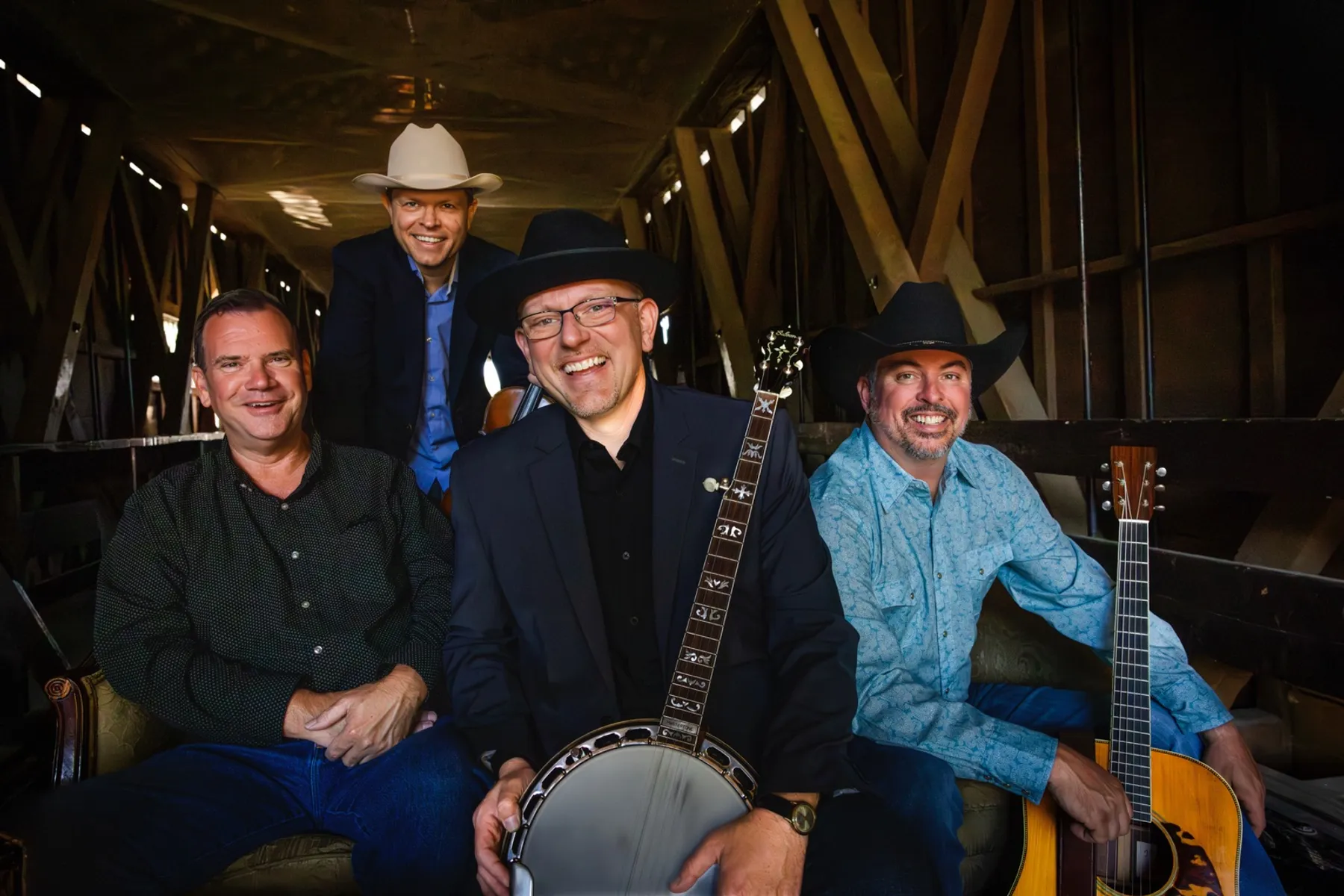
On paper, Daniel Grindstaff & The Uptown Troubadours reads like a classic Bluegrass victory formula: a decorated banjoist, a tight band, a mix of originals and familiar covers, and a tracklist bolstered by heavyweight songwriters and marquee guests. In practice, though, what makes this record work isn’t its résumé—it’s its sense of pacing, taste, and control. This is an album that understands exactly how much to give, and when.
Grindstaff’s credentials are well established. A two-time IBMA nominee with a career that stretches from early Grand Ole Opry appearances at 18 to collaborations with artists like Marty Raybon and Dolly Parton, he’s long been embedded in the genre’s upper tier. But this self-titled project feels less like a showcase of past achievements and more like a recalibration—an artist tightening his focus and surrounding himself with players who share that discipline.
The Uptown Troubadours—Kevin Richardson, Derek Deakins, and Kent Blanton—play a crucial role in that shift. Rather than competing for attention, they operate with a kind of collective intuition. Richardson’s guitar and vocals provide a steady center of gravity, Deakins’ fiddle adds color without excess, and Blanton’s bass keeps everything anchored. It’s a band that prioritizes cohesion over individual flash, and the album is stronger for it.
That philosophy carries through the tracklist. The inclusion of three No. 1 Bluegrass chart hits—“Angel Dream,” “The Death of John Henry,” and “We See Love”—could have easily tipped the project into a greatest-hits package disguised as a new release. Instead, these songs are integrated in a way that supports the album’s overall flow. “Angel Dream,” a reinterpretation of Tom Petty, is handled with a light touch, letting the melody carry rather than overloading it with ornamentation. It’s familiar, but not complacent.
“We See Love,” written by Rick Lang and Jim Grubbs, is arguably the emotional anchor. Its themes—faith, sacrifice, and character—are standard Bluegrass territory, but the delivery is what elevates it. Richardson’s vocal avoids melodrama, and Grindstaff’s banjo work weaves through the arrangement with quiet authority rather than showy dominance.
The album’s most dramatic moment arrives with “The Death of John Henry,” featuring Marty Stuart. It’s a performance built on restraint. Instead of leaning into theatricality, the band lets the story unfold with a measured intensity, allowing each instrument to contribute to the narrative weight without overwhelming it.
Then there’s “Castlerock Turnpike,” the album’s lone instrumental and its most overt display of technical firepower. Written by Grindstaff as a nod to Jimmy Martin, the track is fast, sharp, and meticulously executed. Yet even here, the playing never feels indulgent. It’s a demonstration of skill, yes—but one that remains firmly tied to musical purpose.
The rest of the album fills in the edges with consistency rather than filler. “Denver,” penned by Larry Gatlin, brings a reflective tone, while “A Little Goes A Long Way” leans into gospel influences without drifting into cliché. Covers like “Danny’s Song” and “Corrine, Corrina” are approached with the same guiding principle heard throughout: respect the material, but don’t be afraid to reshape it within the band’s identity.
If there’s a critique to be made, it’s that the album rarely takes risks. But that feels almost beside the point. Daniel Grindstaff & The Uptown Troubadours isn’t interested in pushing Bluegrass forward as much as it is in refining what already works. And in that regard, it succeeds—delivering a record that is polished, purposeful, and quietly confident in its execution.
Rachel Townsend