
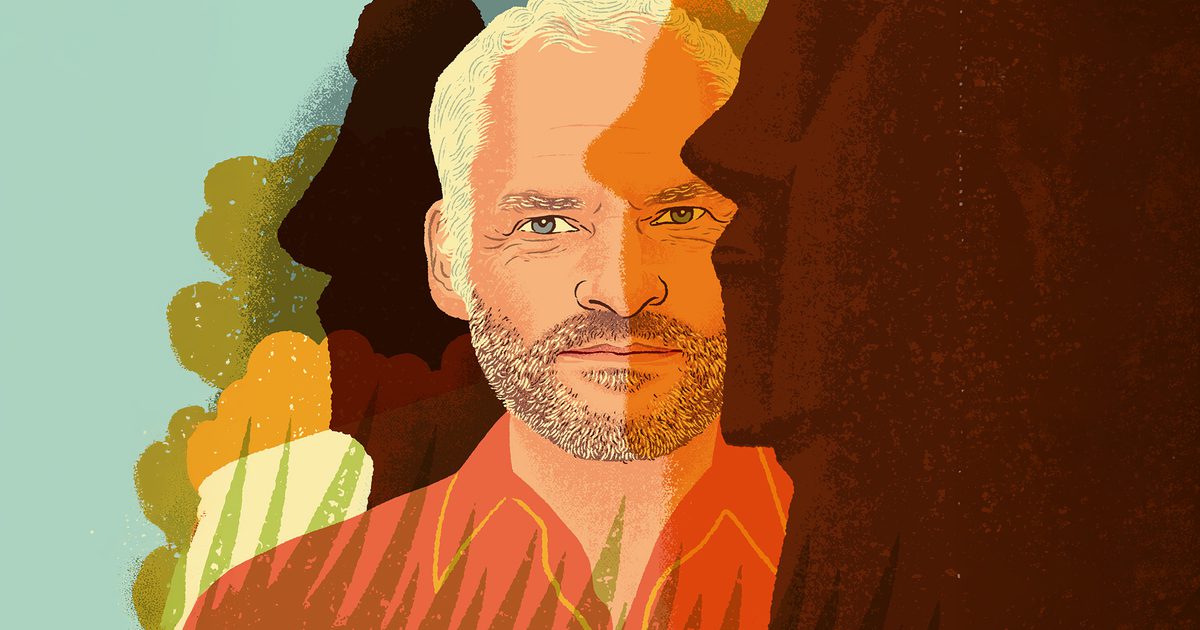
When Martin McDonagh made the transition from stage to screen with 2008’s In Bruges, it was fairly obvious that he was an artist with the ability to excel in both mediums. He had come from arun of lauded stage productions, including 2001’s ‘The Lieutenant of Inishmore’ and his first Broadway production, ‘A Behanding in Spokane’, from 2010. His abiding interest has always been in dysfunctional male relationships, especially in the professional realms of the military, assassins, gangsters and the like. He has always been interested in American culture, where violence is arguably more prevalent. The US provided the backdrop for both 2012’s Seven Psychopaths and Three Billboards Outside Ebbing, Missouri, from 2017. Much of McDonagh’s work is designed to operate in amoral vortex, which often sparks debates about his motives and his objectives, and this was certainly the case with 2022’s popular hit, The Banshees of Inisherin, an Irish-set comedy about the abrupt dissolution of aclose friendship. With his stellar new work, Wild Horse Nine, he takes John Malkovich and Sam Rockwell as cynical CIA stooges to Easter Island in 1973 ahead of the fascist political coup inChile.
LWLies: Tell us about your impulse to set and film astory on Easter Island.
Get more Little WhiteLies
McDonagh: It was probably the Moai – the big heads – that drew me there. The lush greenery was apart of it. The volcanic landscape. There’s lots of lava. But then there are wild horses everywhere too which was probably the biggest eye-opener. Ididn’t know anything about that, and you wouldn’t unless you’d travelled there. Iwrote about four different versions of apossible story for it. And the horses were always there.
As aformer, and to some extent, current horse girl, Ilove this.
I’m always trying to put something from the animal or insect world in my stories. But horses specifically, there’s something sort of spiritual about them and kind. It seems like they can look into your soul when you’re holding theirgaze.
There’s anobility.
They also just look so beautiful. So putting alot of that into it was just the connection between avery ill man and animal life – Iguess that’s what they’re there for. Of course we had adonkey in The Banshees of Inisherin and Ihope it doesn’t feel like it’s repeating the old tricks.
Alongside the horses, this is your fourth film that centres on the complex dynamic between two old friends. Your films are very good at dealing with the emotional minutiae of these relationships.
I think that’s the reason it’s not really shown too often. There are probably too many films about men, but not alot go into the deeper, sadder, more depressing places. Or recognise the fact that we do talk to each other about that shit sometimes. Idon’t know if CIA men do especially, or hitmen, but it’s just my kind of approach to character. Iguess it’s novel and it’s surprising that these people can be emotional. It’s sort of alove story, or maybe it feels like aportrait of amarriage that has gone on toolong.
That’s what’s always struck me about your filmmaking and the stories you wrote for the stage. It’s interesting to see the kind of outpouring of naked emotion that doesn’t feel saccharine or sentimental.
Those are two words you would never use about aMartin McDonagh play. Avoidance of sentiment is always paramount to me in all of the films. Working with actors like John and Sam, they’re just never gonna go there. John especially. But Sam especially too. It’s never gonna be afeelgood movie. It’s never going to appeal to the general box office in terms of straight-up feelgood comedy.
A feelgood comedy about the Chilean dictatorship.
We don’t even have to talk about not making it sentimental when we’re on set. It’s always gonna be agiven that it’s going to be more fucked up thanthat.
It’s in the writing. The gallows humour of itall.
A lot of actors try to avoid ever being the bad guy in afilm, even when they’re written to be the badguy.
John Malkovich is one of the greatest actors of all time, and Ithink people take him for granted sometimes because he’s always been just seemingly on another planet. At what point did he come into Wild Horse Nine?
It was fairly late, actually. Ihad written Sam’s part for Sam. John was only maybe the year before we started shooting. I’d always loved him. Ithink we tried to do aplay together back in the day, but I’d never met him personally until ayear before we started making this, and now Iwas alittle scared because he seemed alittle scary. Iwas scared that he would be the scary John Malkovich, shouting at me for no reason because Iwanted to offer him areally good part. He’s just like, you know, aproper actor. Ithink alot of theatre actors don’t come with that kind of bullshit, you know. Yeah, they’re just interested in good parts or being truthful. He put me at ease and even though Iwas literally scared when Iclicked on the link for that Zoom. But afterwards Iwas like, ‘Oh, this is actually gonna be okay.’ On top of that, Ijust don’t think there’s another actor who could do what he did in this film. It has to be hysterically funny and open and silly, but then we see this other side when he’s alone where he’s completely guilt-ridden and depressed and has been changed.
This is your third film with Sam Rockwell and you guys work so beautifully together.
And we did aplay together before that.
Oh, didyou?
Yes, ‘A Behanding In Spokane’.
Of course! With Christopher Walken. Have you and Sam got to that point now in your working relationship where you have aprivate shorthand?
Not so much that he can’t give feedback that Iwouldn’t have necessarily thought of. For this specifically, his character is always the kind one – he’s taking care of his friend in this. But he still wanted acouple of moments where you see the killer. There’s ascene with an English couple where, from nowhere, he just goes off and they haven’t done anything. You kind of see that he’s capable of something dangerous – and that wasn’t in the script before Sam. With Sam, there’s an ease to our relationship. We get on great. But on the first week of this, we weren’t quite gelling like we used to. And so on the first weekend, we just sat in his hotel room on the island and just said, ‘Well, like, what’s going on? Why isn’t it as much fun?’ And we worked it out because Irealised Iwas coming in with notes after the first take. With me, like, I’ve usually written the film two years before or longer sometimes. So I’ve already sort of heard it in my head. And when you’ve written it for Sam, you’ve heard his voice and how he should do it exactly in your head too. Ithink, with this, you often get that out of the way with rehearsals, but we didn’t have alot on this. Iwas coming in and being abit heavy-handed, literally after the first take. So in my head Iwas like, ‘Why can’t you do it properly? Haven’t you even read it? It’s like the previous ones.’ But he said, ‘If you just give us alittle bit more room…’ And we did. So, from then on, we did two takes at least without any notes. And weirdly, they would always get to the place that was in my head anyway, but having been allowed to be completely free to get there. So it’s weird that, as friendly and as well as you work together, it’s always evolving and interesting.
Those are the ebbs and flows of any friendship. You do find yourself occasionally butting heads. It actually takes alot to be like, right, let’s see what’s going on here and try to work things through.
Exactly, yeah.
As someone who writes for the stage and the screen, do you always know when you start working on something if it’s going to be aplay or afilm?
Completely. But I’ve just started something and, for the first time ever, it could go that way, or it could go the other way. Usually, if there’s awider cinematic canvas – and for me it’s usually place or location or whatever – and if it jumps around in time, it’s going to be afilm. Basically, if it’s not four blokes chatting in aroom, it’s gonna be afilm. If it is four blokes chatting in aroom, it’s gonna be aplay.
With The Banshees of Inishirin was it that you needed the island itself to be… because Imean it without sounding like the cliché – it feels like the island’s acharacter in thefilm.
I mean, it’s acliché, but it’s kind of true, and it’s similar forWild Horse Nine. But in all my plays, all my films are quite play-like, you know. But there’s no way that In Bruges could have been aplay, even as theatrical as it seems, and Ithink that is the reason the places become the fifth character, or however many.
A lot of your work is set in America or explores the concept of Americana. Living in the UK, we are infected by American culture. What perceptions of America did you have growing up and how did they shape your interests?
I guess American cinema was probably the first love that Ihad. When Igot into films it was through all of the De Niro/Scorseses, Terrence Malick, which was only two at the time. American cinema was – and still is – at the forefront of what Ilove about cinema, Isuppose. But also music from Nirvana to early rock’n’roll. Good American influence is okay. It’s just when it becomes fascist it’s less engaging. Also novels – JD Salinger and people like that were always abig influence.
The cinema of the Seventies did really delve into the political darkness of thetime.
They were freer to be more downbeat and more honest about things because America was going through adark patch then. But Iwonder if, because it is again now, more films like this might start cropping up. So many people are questioning all that stuff in America now that maybe it’s right for films like this to start coming out. Ilove American movies and music and all that. Idon’t think this film is anti-American, for instance. But it’s not pro-CIA and it’s not pro that American government.
I was particularly moved by the speech that Chris makes about the assassination of the Congolese prime minister, Patrice Lumumba. Iwas struck by that inclusion because he speaks out at length, and that speech is really quite harrowing, but it’s very touching. It feels like it’s really the crux of what Chris is going through – this moment of deep clarity.
That was always in there. That was always part of what I’d been interested in about what the CIA had been doing around the world. Ithink, with Chile, Iread alot more about it way back in my teens and twenties, but the Congo stuff Ididn’t really know as much about until the last 10 or 15years. That was definitely something that fell into place really when that part of his character came up. Especially in connection to the Kennedy thing. One of my favourite lines is where he talks about that, who’s remembered and who isn’t. But it’s also the main moment where you are alone with him and see how much of what he’s done has destroyed him.
It almost feels like you’re in the confession booth with him, because you’re listening to this man admit one of the worst things that he’s ever done. Which Ithink is jarring for an audience, because we want to believe that these people should be prostrating themselves about these incidents. But at the end of the day, even if they feel guilty, it’s never thatclean.
Absolutely, absolutely. I’m glad you like that bit. Ithink that’s one of my favourite sections init.
Finally, Iwould like to touch on Tom Waits, because he comes in for his one sceneand…
Steals themovie.
He steals the entire movie. The casting of him and John as brothers is inspired.
I’m not sure if it was before Istarted, but it was definitely, like, as soon as it was written it had to be someone iconic and who could, you know, stand up to John. They had to have just the presence and alook that was cinematic and that would just grab you. And having loved him since my teens and worked with him abunch of times and stayed in touch with him over the years, he was completely my first choice and he said yes straight away. His scene was the very last day of shooting aswell.
Oh, really?
We finished all the South American stuff and then went to Monument Valley for the last couple of days, where we did Parker [Posey]’s stuff and then the final morning was Tom Waits and we finished by, like, noon Ithink.
I’m sure that he was happy. He seems like aman he would like to finish bynoon.
Yeah, but Tom is such agentle, beautiful, kind, open, almost shy kind of person that he’s just always ajoy to be around. Iwouldn’t say he stole the film, but yeah, you’re not expecting him to pop up at that moment, Ithink.
Is it still as exciting for you when you hear him open his mouth and it’s TomWaits.
Yeah, just being in aroom with him…. Ialways think that directing or even just talking to Tom Waits is still something that’s beyond my wildest dreams.