
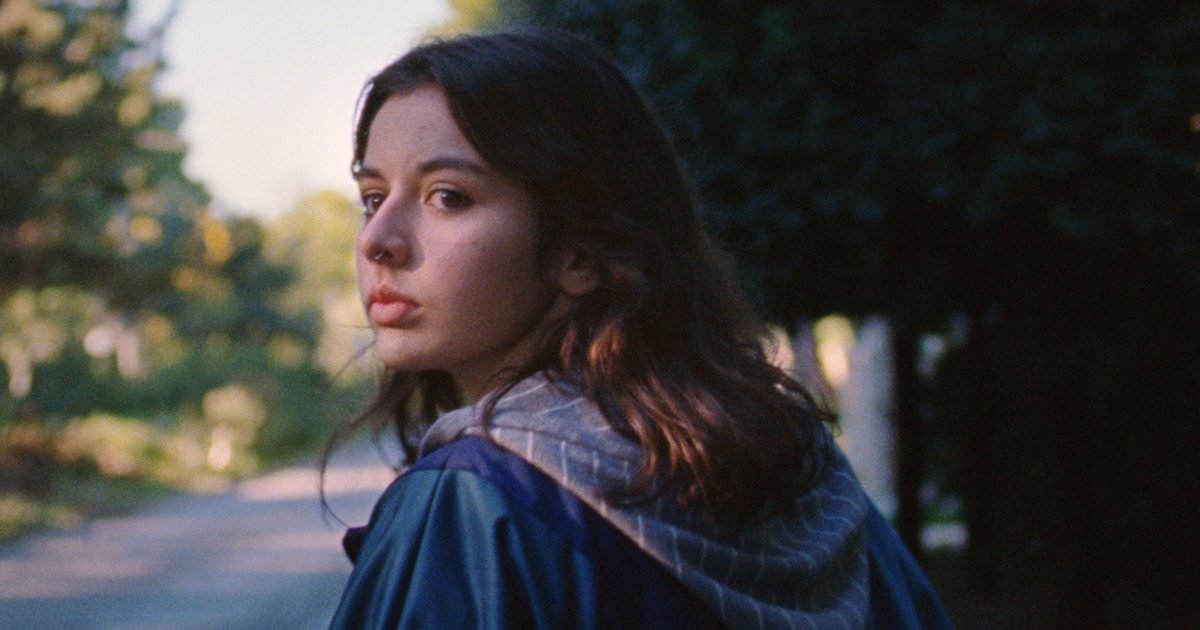
Fifteen-year-old Jo (Evita Andriopoulou) is having abad day. Her dog is missing, she’s late for school, and she had astrange dream the night before. After kicking the wing mirror off her mother’s car in afit of frustration, she heads, shoulders hunched, into another boring day of classes, where classmates gossip and grumble in hushed voices while working on their art projects. Jo doesn’t yet realise that her life is about to change – after being immensely moved by fellow pupil Phaedra’s (Anastasia Gouliamou) performance of an old song, she shyly resolves to befriend her. And then, as the day slips into night, asplit-second mistake changes the worldagain.
Jacqueline Lentzou’s second feature film is abold announcement from the Greek filmmaker, whose distinctive handmade aesthetic is well-suited to her young protagonist. Inspired by the murder of a15-year-old boy in Athens that led to the country’s 2008 riots, ADay in the Life of Jo – or to give the film its full title, ADay in the Life of Jo: Chapter Phaedra (A Film About Breath, Hands and Loneliness) – is adifferent sort of coming-of-age film. The shy but spiky protagonist is excellently embodied by Andriopoulou, who captures the myriad emotions that ateenage girl encounters throughout any given day. One of the film’s most touching scenes comes when agroup of young girls excitedly show Jo aturtle they’ve found; she humours them and says she’ll come to look for it in afew days’ time. The moment takes on particular poignance given the events that follow.
Get more Little WhiteLies
The film is at its best when capturing these sweet, slight moments throughout Jo’s day; the decision to switch to amuch more experimental approach in the third act is foreshadowed by the film’s opening but asks alot of the audience reeling from adevastating narrative left-turn. If this filmmaking decision doesn’t entirely work, it’s nevertheless not enough to upend the entire project. ADay in The Life of Jo’s final moments are among its most affecting, carefully, quietly showing the void left by asenseless loss.
The craft of the film is also impressive; Grimm Vandekerckhove’s cinematography captures the whimsy of girlhood without tweeness, while the soundscape (designed by Leandros Ntounis and Jakob Spengemann with the always excellent Colin Stetson on score duties) creates asensory lushness indicating Lentzou’s ambition as astoryteller. This in itself is an encouraging sign, and indicates Lentzou is afilmmaker to keep aclose eyeon.