
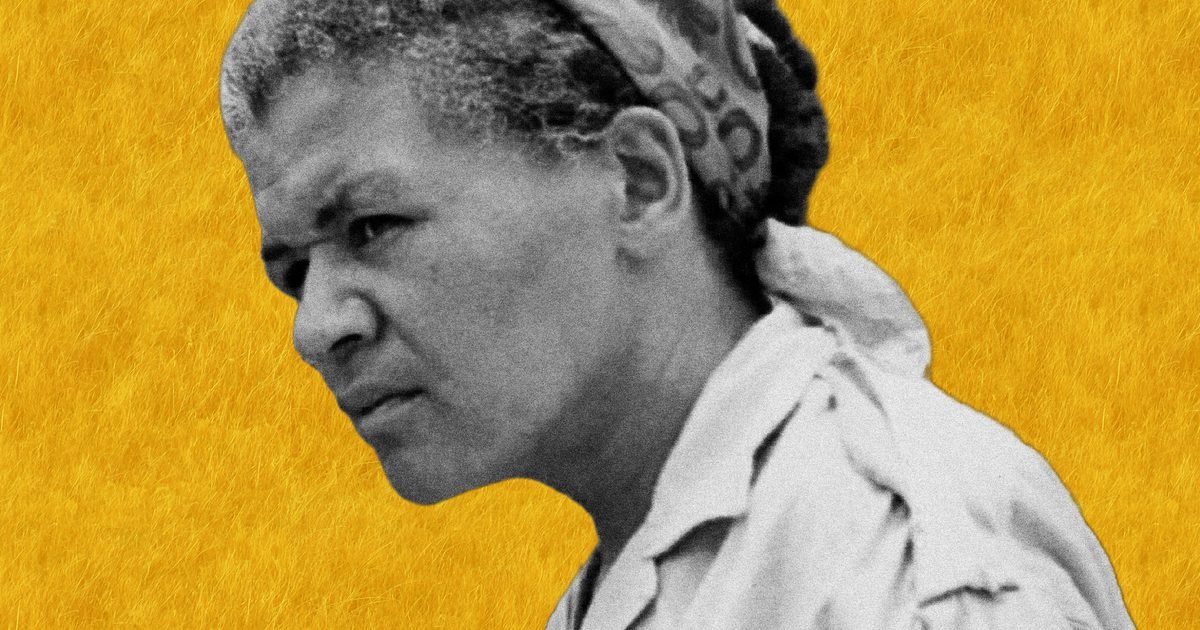
Last month, Isaw an archive film collection titledThe Archive Reimagined: Pan-African Histories and the Moving Image at the Barbican for theirProject aBlack Planetexhibition, which has also recently screened Maldoror’s films. The collection sought to answer the question of what happens to the archive when we forget that it exists. Do the filmmakers and radical figures within still find importance when their politics are no longer commercially viable? It’s clear that within our current landscape, one that decries anything progressive or Black as “woke” – aword borrowed from the same Black radical tradition Maldoror was working within – today’s actors, musicians, filmmakers, and archivists are fighting asimilar battle. Despite promises to do better, uplift Black voices and talent and stories, we find fewer Black people andBlack women in particular,leading TV shows and mainstream films. The cultural output of Blackness walks atightrope of acceptance through consumption, or neglect through brutality.
Should we take advantage of the consumption? If so, how? For Annouchka, it was clear that the 2020 wave of acknowledgement was fleeting. Refusing to mince words, she states, “Everyone was so excited to discover aBlack woman filmmaker. It was clear that something had changed, and so we had to jump on before it was too late.” This wave led to the restoration ofSambizanga with the aid of Martin Scorsese, the World Cinema Project, and Cineteca di Bologna. It was important for Annouchka that her mother’s work was not just tied to one film, given that her filmography includes 46 entries. “People need to understand how vast and rich her work was, and that they do not ignore the rest,” she explains. To ensure this, the titles in the season include ashowcase of three of Maldoror’s short films –And the Dogs Kept Silent(1978),The Mask of Words (1987) andSlave’s Route: Glimpses of Memory (2003) – ablend of Maldoror’s passion for poetry and theatre through her reimagining of the work of the prolific poet, playwright, and essayist Aimé Césaire.
Maldoror was not only afilmmaker. Poetry and theatre, Annouchka explains, was the lifeblood of her mother. “She built her life around poetry, and Ibelieve it was her main skill. Her identity was poetry because, for her, poetry was politics. I’m trying to refocus on that, and let people know that there is so much about her they’ve yet to discover. Iwant them to reconsider what they know abouther.”
Both Maldoror’s daughters have continued to pass on their mother’s beliefs and brought new life into her legacy, allowing audiences to meet the woman they grew up with. Through screenings of the short documentary tributeSarah Maldoror ou la nostalgie del’utopie (1999), filmed Q&As, and alive reading by Annouchka of her mother’s 1959 interviewThe Queen of the Blacks Speaks to You about Whites, we witness adaughter’s re-examination of her relationship with memory in real time. Speaking of her mother with palpable admiration, Annouchka explains, “There were some things we didn’t know about her childhood. As she got older, Ipromised we would restore her work. Icouldn’t answer definitively since the negatives ofSambizangaweren’t available to us at the time, but Itried my best to keep her vision alive. She gave us her blessing. We must be faithful toit.”
And faithful they have been. Their ongoing efforts to inspire younger audiences in an age of irony and division are indeed revolutionary. Sarah Maldoror is not aname Iremember hearing when first entering film spaces as ateenager, but it’s one that I’ve found has stuck with me as I’ve gotten older. Her work as apoetic filmmaker asks us to pay attention to horrors but also to beauty. Our world must change but we cannot lose ourselves whilst doing so. We can draw inspiration from her work for our own creative outputs to foster her belief of aworld free and fair to Black people and Black women. Though it may seem asmall victory, from our conversation it’s clear that what we can learn from Sarah Maldoror as aperson, is to persist against injustice, no matter itssize.
A Poet with aCamera: The Cinema of Sarah Maldorortakes place at the BFI Southbank from the 2nd of September until the 3rd of October.