

Cricket just wants to dance.
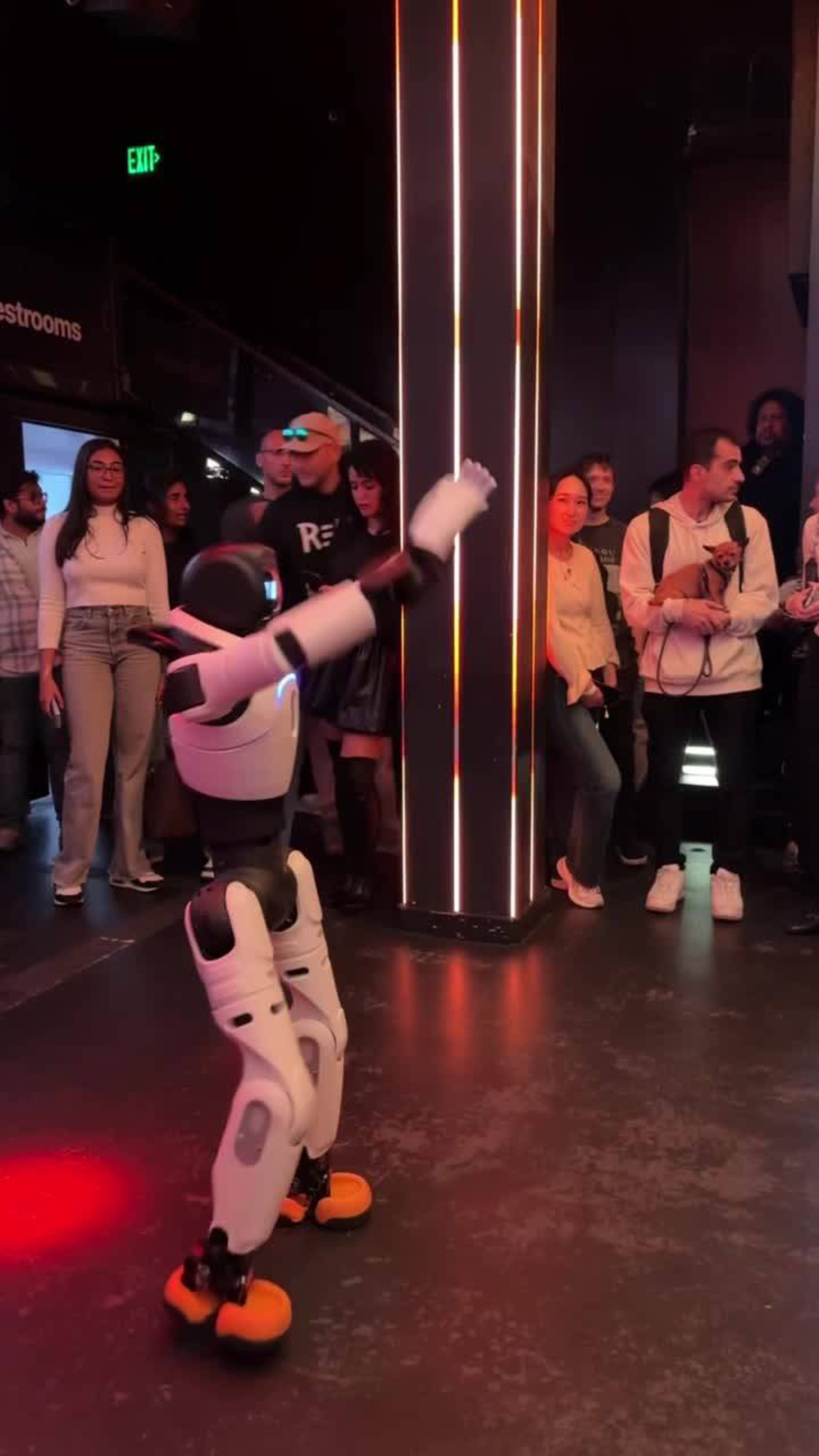
The $40,000 humanoid robot walked to the center of an octagon cage inside SoMa’s Temple nightclub Thursday night wearing a neon pink wig and struck a pose. A moment later, A-ha’s “Take on Me” filled the air, and Cricket started swiveling its hips, gyrating to the beat.
Unfortunately for Cricket, it followed Johnny Anthony Lopez, who runs Oakland dance company TURFinc, and seven of his crew. They dropped, popped and locked, performing turf dancing, the Oakland street moves. One dancer, a contortionist, folded to the floor, arms moving like rubber.
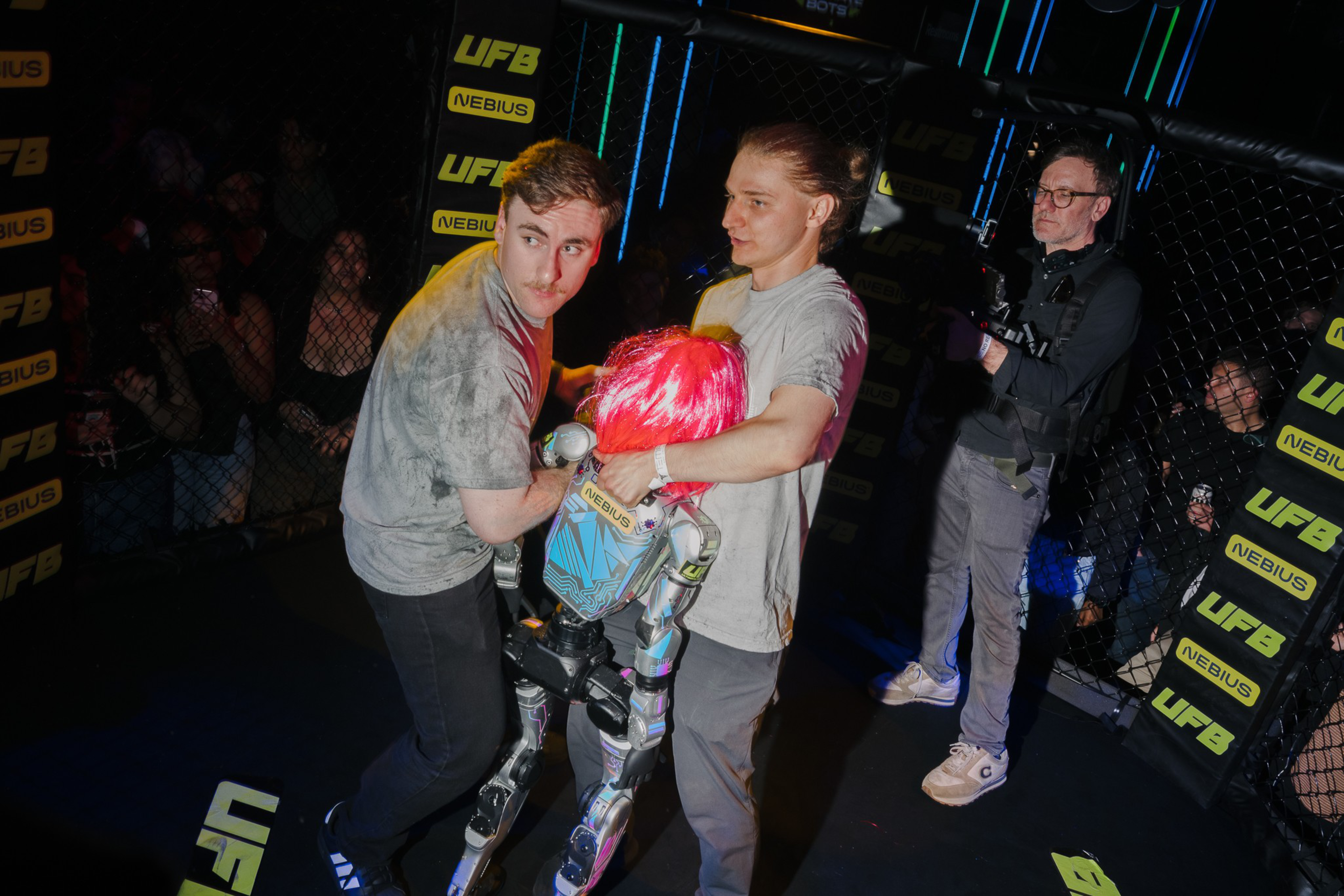

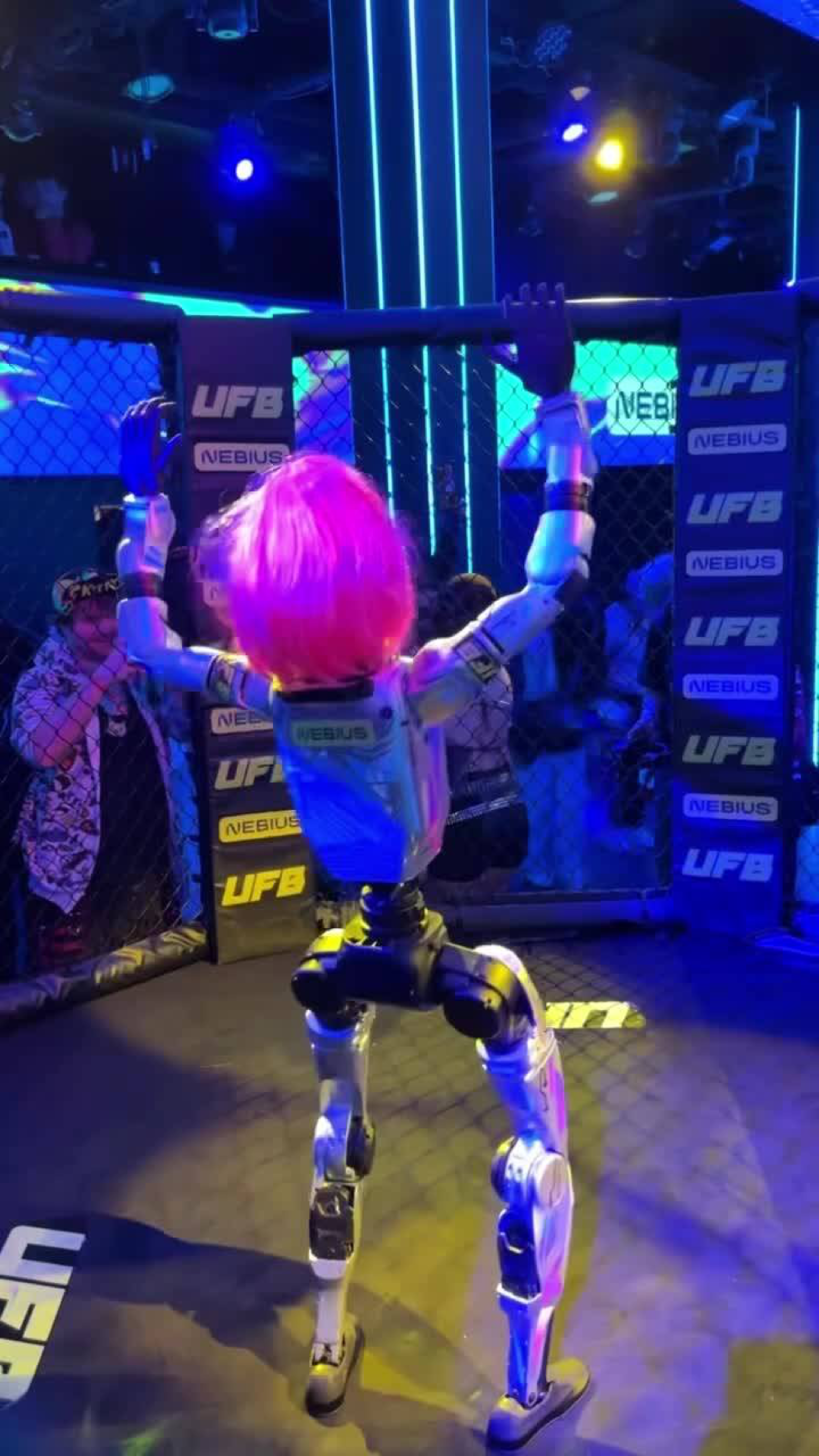
It was a heavy act to follow, and Cricket fully disappointed. It executed three preprogrammed dances. The first was skillful, but the second stalled halfway through. During the third, an engineer had to physically push the robot back into the ring.
The demonstration was part of a “dance-off” meant to highlight the latest improvements to the robot, a two-year old G1 model from Chinese company Unitree. Programming a humanoid robot to dance used to take engineers weeks, but now the moves can be generated from a video upload. The night was ostensibly both a debut of the robo-dancing and a showcase for the public launch of Studio, (opens in new tab) a robo-choreography tool.
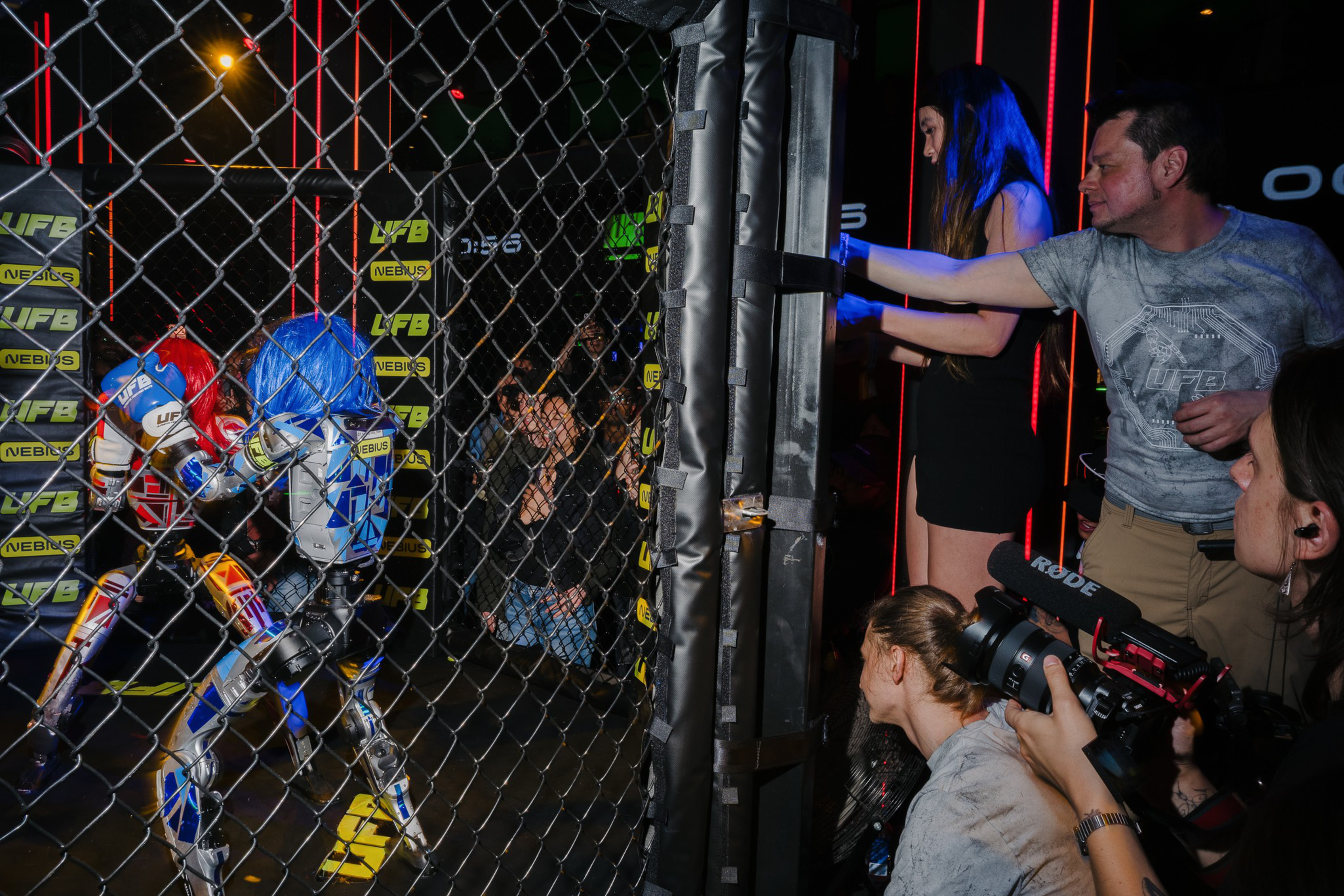
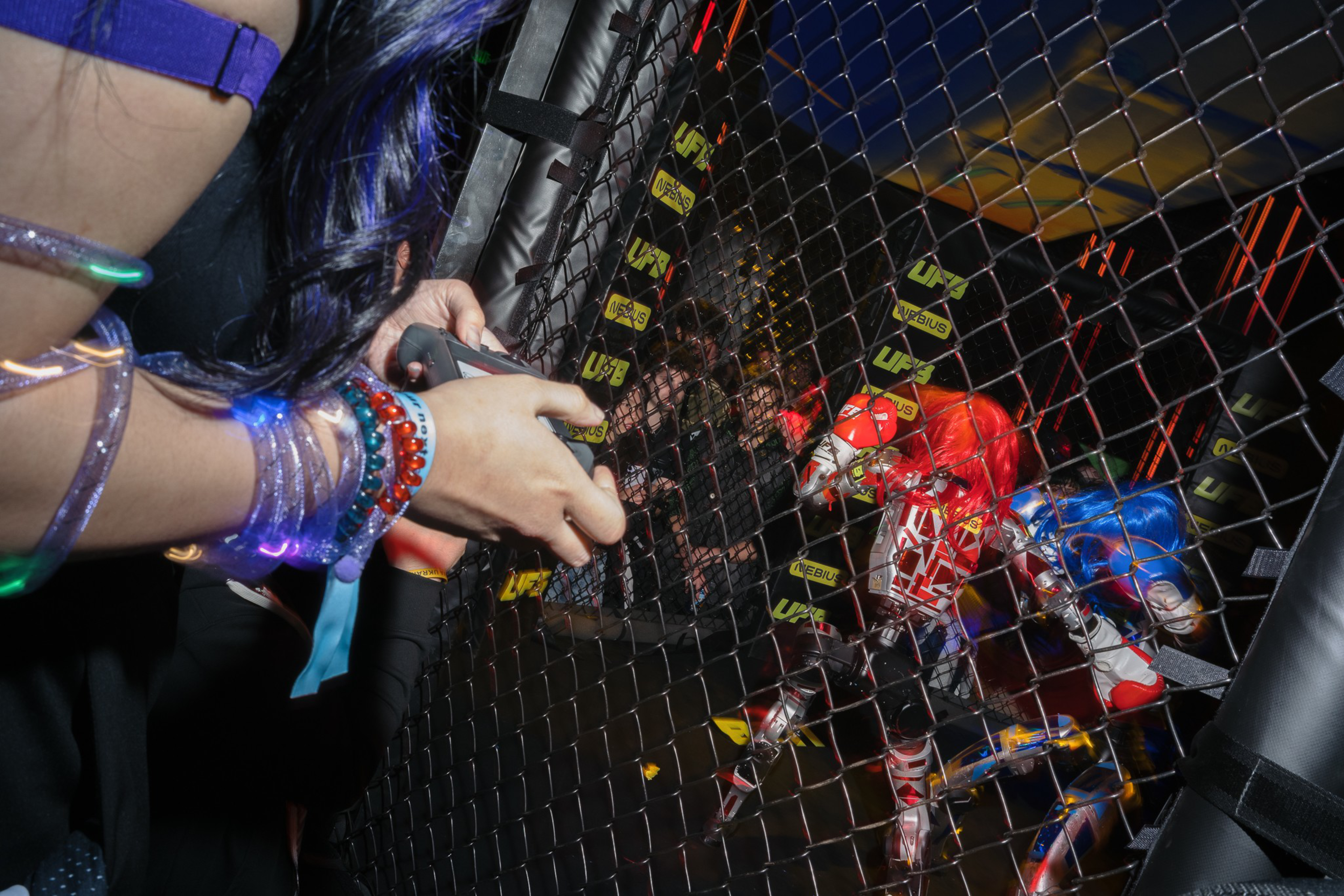
The dance demonstration was more of an afterthought than the main event. Earlier in the night, two Unitree bots had been part of a fight demonstration, throwing punches in the ring. It wasn’t a one-off. Over the last year humanoid robot fight clubs have become a fixture at techie-oriented San Francisco parties and events.
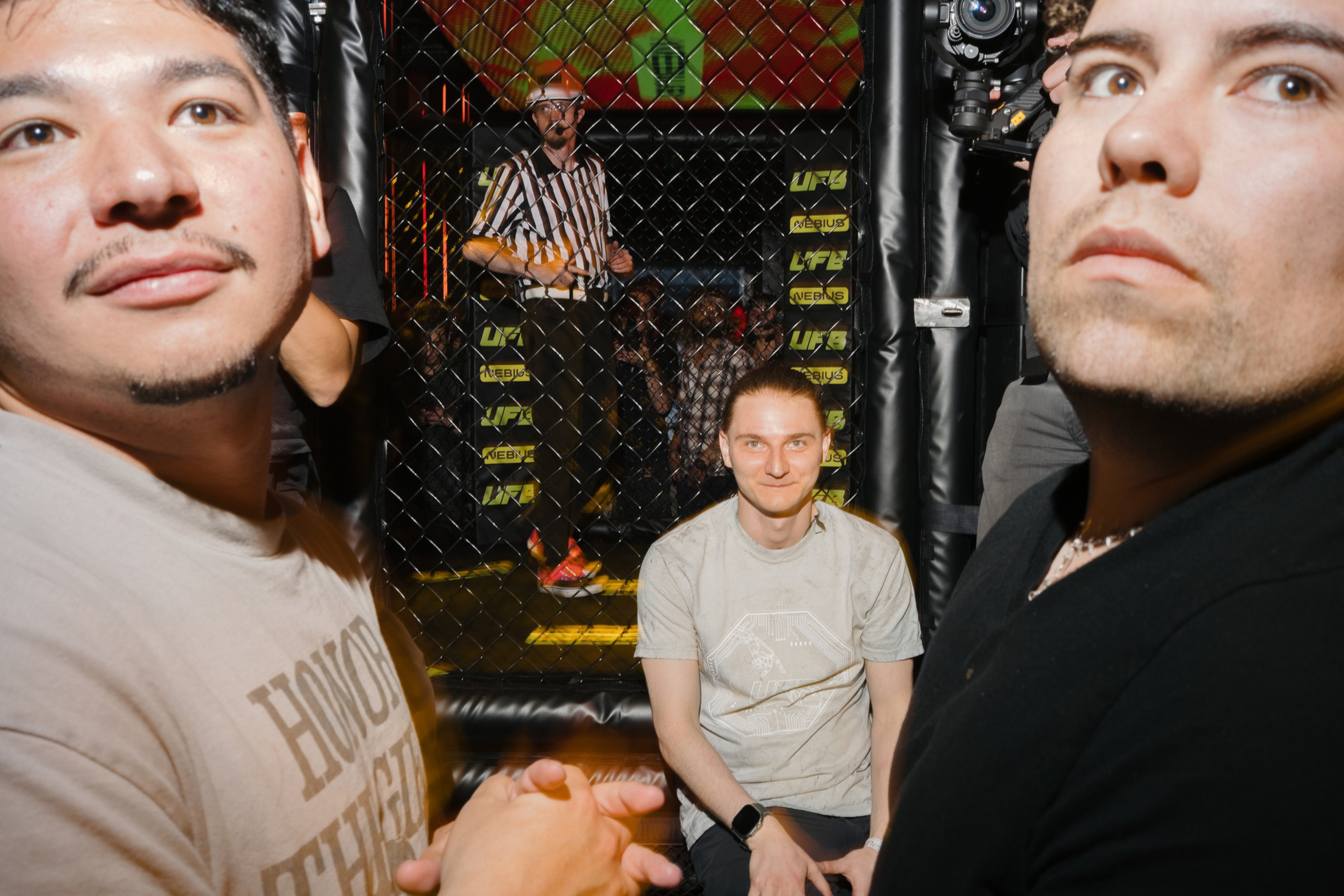
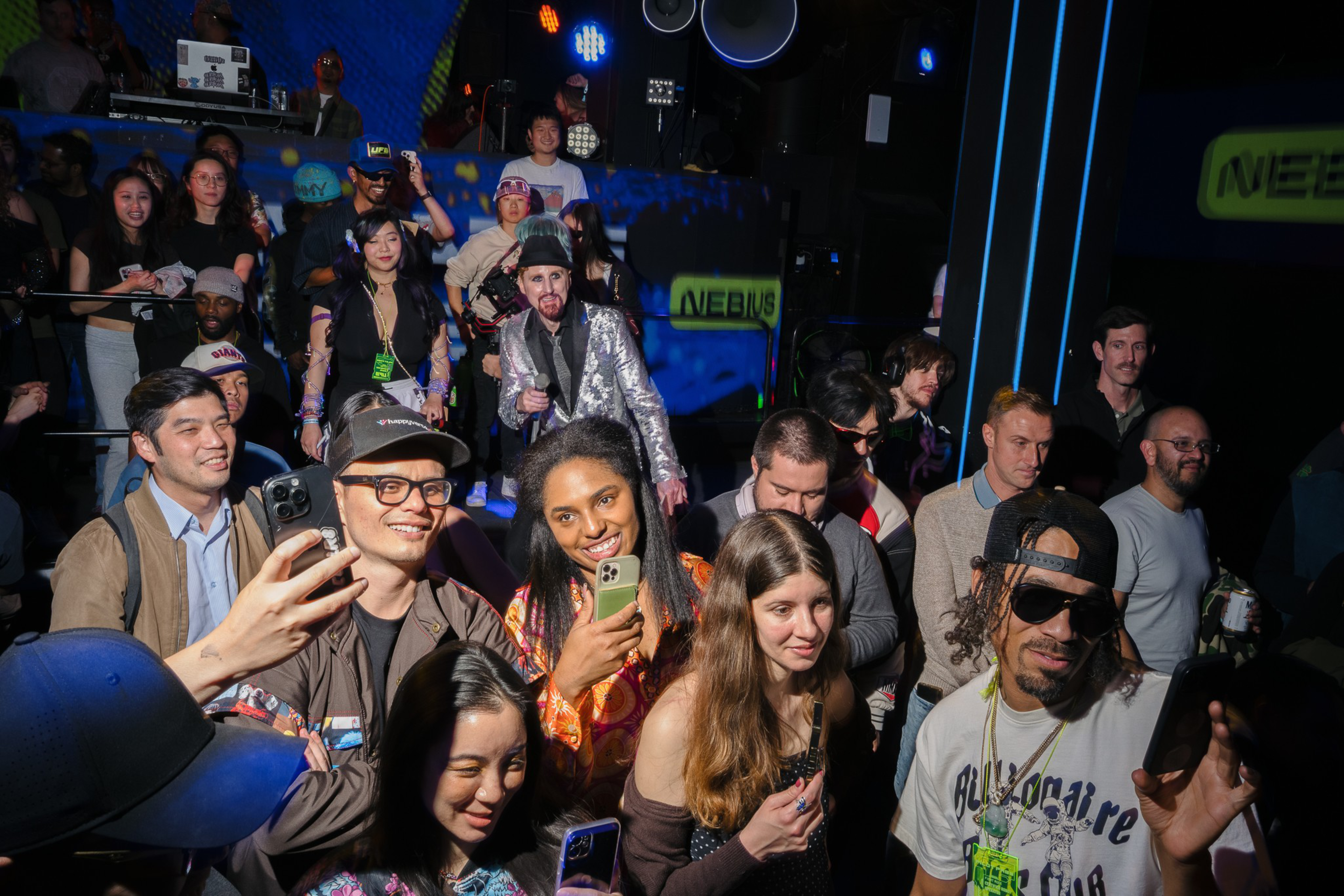
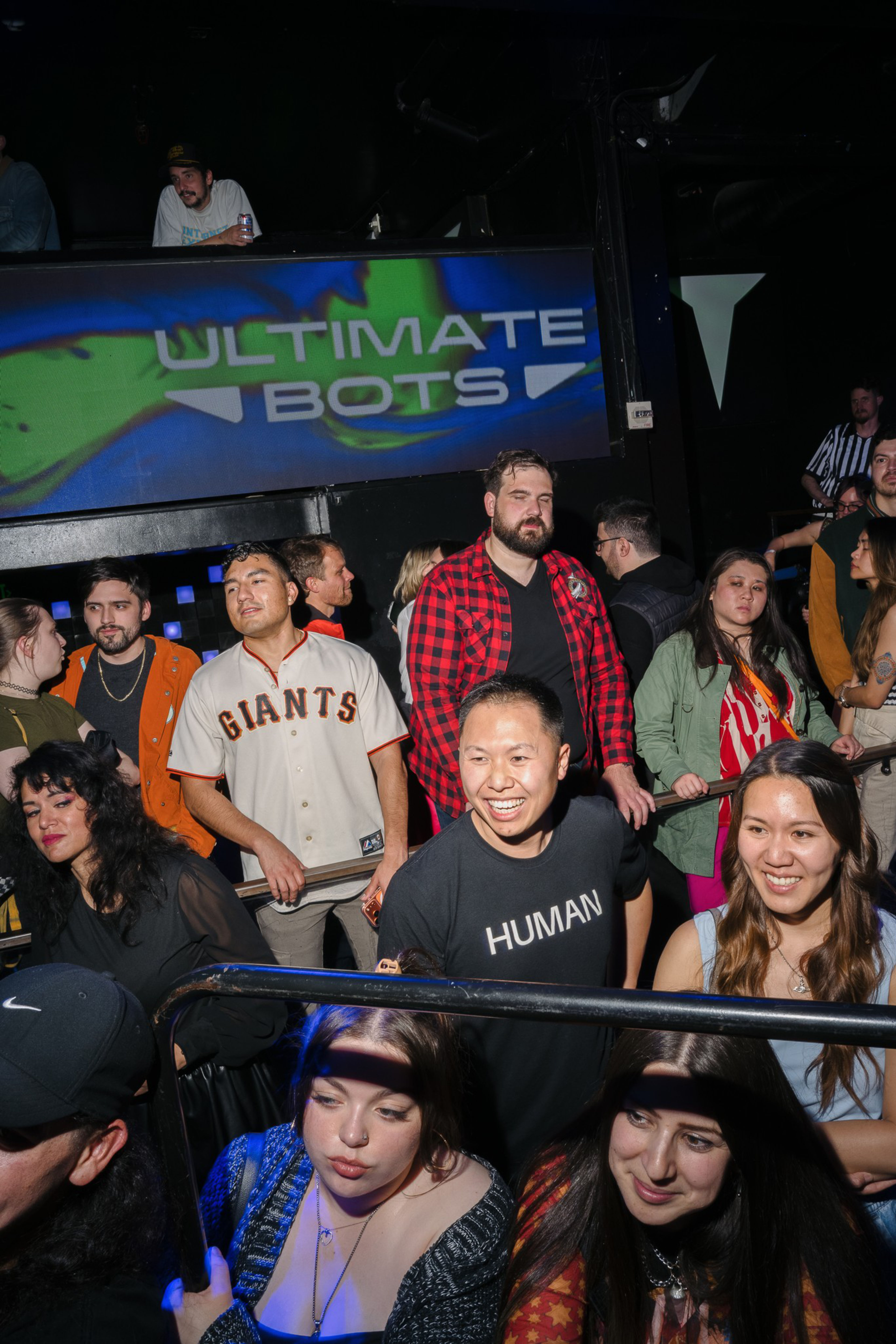
The crowd was a mix of tech workers wearing hoodies and backpacks, tees with slogans like “internet person” and “insert code here,” and a smattering of clubwear. Doors opened at7 p.m., robot battles began at 7:40, and the dancing didn’t start till 9:40, at which point the crowd had thinned.
“I didn’t even know that dancing was a part of this,” said Pat Santiago, founder of Accelr8, (opens in new tab) a hacker house community, who had stuck around. He was initially skeptical of the dance premise. “They tend to have a limited repertoire,” he said of robots but revised his opinion afterward. “I was actually really impressed,” he said. “It’s really progressing. Every time I see a robot dance, it’s 10x the last time.”
The main event of the night was a bigger hit.
The fights followed a predictable rhythm: three 90-second rounds filled with wild swings, body slams, and robots walking into walls while their amateur operators tried desperately to steer them. A human referee counted blows and reset the bots when they faceplanted.
The seventh bout mixed things up. Vitaly Bulatov, cofounder of Ultimate Bots, faced Trey Roski, cofounder of BattleBots, controlling their respective machines. The first sign this was different came when the referee was kicked out of the ring. The second came when Vitaly’s robot opened with a roundhouse kick, pivoting on one foot and landing it on his opponent’s chest.
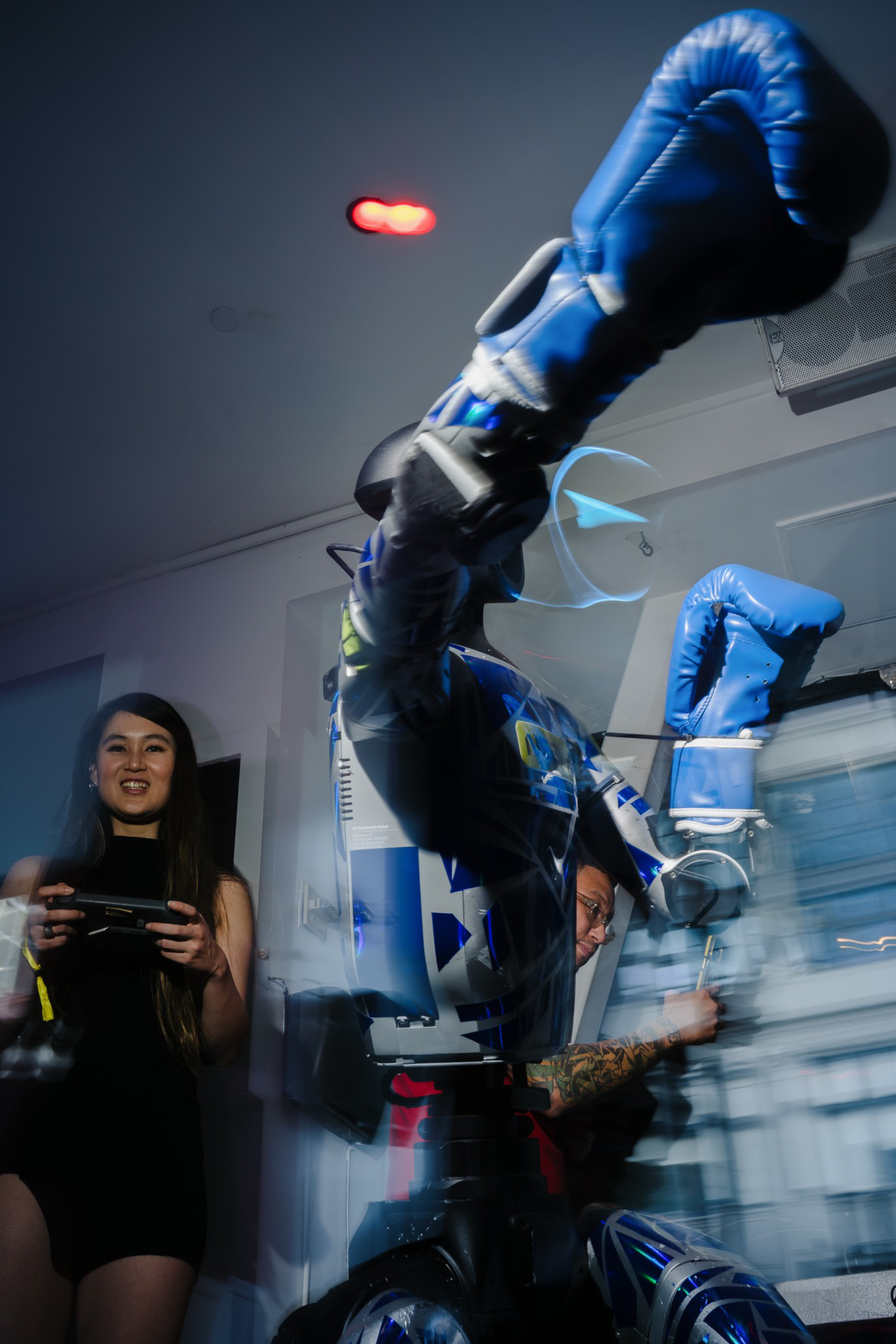
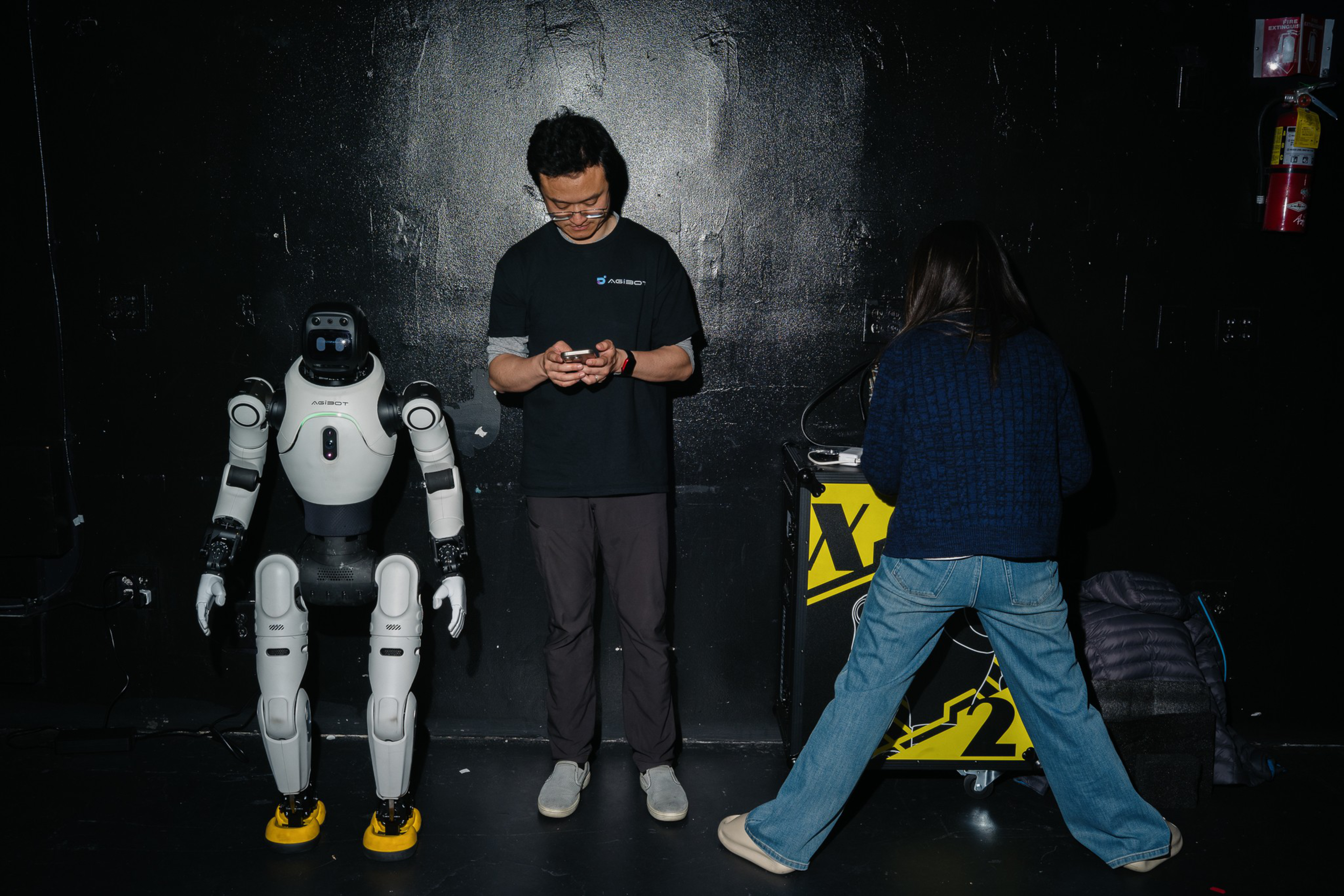
Watching two skilled controllers battle demonstrated how important the humans’ roles are. The robots sprung up from the floor, dodged and weaved, and targeted each other with uncanny precision.
Fight clubs aren’t just for demonstrating technological improvements but are the first step toward “a competitive sport format for the humanoid robotics industry,” said Xenia Bulatov, cofounder of Ultimate Bots (opens in new tab) (formerly Ultimate Fighting Bots). Dance, meanwhile, “opens up an additional cultural layer of how humans and machines can collaborate,” she said.
Have thoughts on this story?
Tae Marsden, 35, a drag clown from Oakland’s Ruckus Revival, said the fighting entranced her. “I grew up with WWE and UFC, and I really appreciated the metal-on-metal action.” Still, she found the second part of the evening mid. “I thought the robot dancing left a lot to be desired.”
Ram Ravi, 35, a machine learning researcher from Oakland, was more forgiving. The dancing was OK, he said, though the fighting was better. He’s not sure he’d go to an event that was just robot dancing. “It depends on the progress that’s been made,” he said. “If they brought different robots, that would make it more interesting.”